



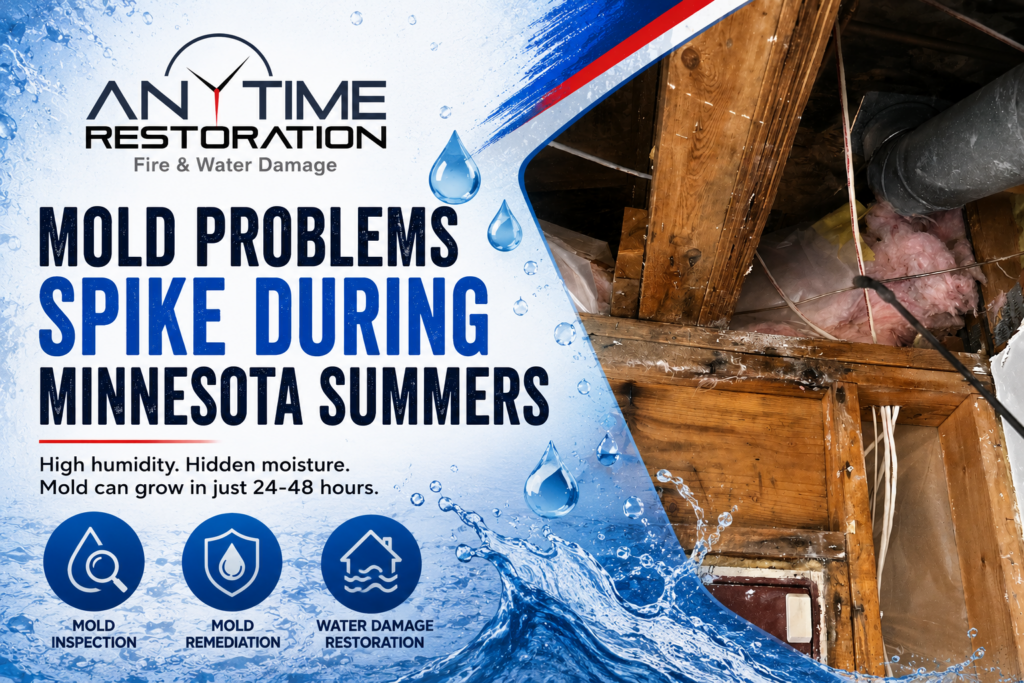
High humidity and hidden moisture can create the perfect environment for mold growth during Minnesota summers. Learn how to identify early warning signs and protect your property with professional mold inspection and mold remediation services.
Why Mold Problems Spike During Minnesota Summers
Minnesota summers bring warm temperatures, higher humidity levels, and frequent rainstorms. While many homeowners look forward to spending time outdoors, summer weather can create the perfect environment for unwanted mold growth inside homes and businesses. What begins as a small moisture problem can quickly turn into a significant issue requiring professional mold remediation.
At Anytime Restoration, we frequently see an increase in mold-related calls during the summer months. Understanding why mold problems spike during Minnesota summers can help homeowners take preventative measures and recognize warning signs before extensive damage occurs.
Why Summer Creates Ideal Conditions for Mold Growth
Mold thrives in environments where moisture, warmth, and organic materials are present. Unfortunately, Minnesota summers often provide all three.
High humidity levels can introduce excess moisture into homes even when there are no visible leaks. When warm outdoor air enters cooler indoor spaces, condensation can develop on surfaces such as walls, pipes, windows, and HVAC systems. This moisture creates ideal conditions for mold growth.
Heavy summer rainstorms can also contribute to hidden water damage. Roof leaks, foundation cracks, overflowing gutters, and poor drainage can allow water to enter a home and remain trapped in walls, insulation, crawl spaces, or basements.
Once mold spores encounter moisture, they can begin growing within 24 to 48 hours. The longer moisture remains untreated, the greater the risk of mold spreading throughout the property.
Common Areas Where Mold Grows During Summer
Many homeowners assume mold only appears in basements, but mold can develop almost anywhere moisture is present.
Some of the most common locations include:
Basements
Basements are naturally prone to humidity and moisture intrusion. Summer storms and elevated groundwater levels can cause damp conditions that encourage mold growth.
Attics
Roof leaks, inadequate ventilation, and warm attic temperatures can create a breeding ground for mold during summer months.
Bathrooms
Steam from showers combined with poor ventilation often leads to excessive moisture accumulation.
Crawl Spaces
Many crawl spaces experience humidity problems due to poor airflow and moisture migration from the ground.
Around Windows
Condensation that forms on windows during humid weather can promote mold growth around frames and drywall.
HVAC Systems
Air conditioning systems can create condensation. If drainage issues occur or filters are neglected, mold may develop within ductwork and equipment.
The Connection Between Humidity and Mold
One of the biggest factors behind summer mold problems is humidity.
When indoor humidity levels rise above 60%, mold growth becomes significantly more likely. Many Minnesota homeowners are surprised to discover that mold can develop even when there has not been a flood or major water damage event.
Signs of excessive humidity include:
- Condensation on windows
- Musty odors
- Damp feeling air
- Peeling paint
- Warped wood surfaces
- Persistent moisture in bathrooms or basements
Maintaining indoor humidity between 30% and 50% can significantly reduce the risk of mold growth.
Using dehumidifiers, improving ventilation, and addressing moisture problems quickly are important preventative measures.
How Water Damage Leads to Mold Problems
Many mold issues begin with unnoticed water damage.
A small plumbing leak behind a wall, a slow roof leak, or water entering through a foundation crack may go unnoticed for weeks or months. During summer, elevated temperatures accelerate mold growth in these damp environments.
Common causes of water-related mold problems include:
- Burst pipes
- Leaking water heaters
- Appliance failures
- Roof leaks
- Foundation seepage
- Flooding from storms
- Sewer backups
- Poor drainage around the home
When water damage occurs, immediate drying and restoration are critical. The longer materials remain wet, the more likely mold growth becomes.
Warning Signs You May Need a Mold Inspection
Mold is not always visible. In many cases, it grows behind walls, beneath flooring, or above ceilings.
Scheduling a professional mold inspection may be necessary if you notice:
Persistent Musty Odors
A strong earthy or musty smell is often one of the first indicators of hidden mold.
Visible Discoloration
Black, green, brown, or white staining on walls, ceilings, or other surfaces may indicate mold growth.
Recent Water Damage
Any flooding, plumbing leak, or moisture intrusion event increases the likelihood of mold development.
Peeling Paint or Wallpaper
Excess moisture behind surfaces can cause paint and wallpaper to separate from walls.
Increased Allergy Symptoms
Some occupants experience increased respiratory irritation, sneezing, coughing, or other symptoms when mold is present.
High Indoor Humidity
If humidity levels consistently remain elevated, mold may already be developing in hidden areas.
A professional mold inspection can identify moisture sources, locate hidden mold, and determine the extent of contamination.
Is Black Mold More Dangerous?
One of the most common questions homeowners ask involves black mold removal.
The term “black mold” is often used to describe several different species of dark-colored mold. One of the most well-known varieties is Stachybotrys chartarum.
While some molds receive more attention than others, any mold growth should be taken seriously. All mold indicates a moisture problem that requires correction.
Rather than focusing solely on mold color, homeowners should concentrate on:
- Identifying moisture sources
- Preventing further mold growth
- Proper mold remediation
- Improving indoor air quality
Attempting to remove large mold infestations without proper containment can actually spread spores throughout a home.
Why DIY Mold Removal Often Fails
Many homeowners attempt to clean mold using household cleaners or bleach.
Unfortunately, surface cleaning rarely addresses the root cause of the problem.
Professional mold remediation focuses on:
- Identifying the moisture source
- Containing affected areas
- Removing contaminated materials
- Cleaning and sanitizing surfaces
- Drying affected structures
- Preventing future growth
Without eliminating the moisture source, mold often returns even after cleaning appears successful.
How Professional Mold Remediation Works
At Anytime Restoration, mold remediation begins with a thorough inspection.
Our team identifies:
- Areas of mold growth
- Moisture sources
- Extent of contamination
- Structural damage concerns
The remediation process may include:
Containment
Affected areas are isolated to prevent spores from spreading.
Air Filtration
Specialized HEPA filtration systems help remove airborne contaminants.
Removal of Contaminated Materials
Depending on severity, drywall, insulation, carpet, or other materials may require removal.
Cleaning and Sanitizing
Remaining surfaces are thoroughly cleaned and treated.
Drying and Moisture Control
Industrial drying equipment helps eliminate excess moisture.
Restoration
Damaged building materials are repaired or replaced as needed.
The goal is not simply to remove visible mold but to create conditions that discourage future mold growth.
Summer Mold Prevention Tips
The best mold remediation strategy is prevention.
Homeowners can reduce mold risks by following several simple steps:
Control Indoor Humidity
Use dehumidifiers in basements and other moisture-prone areas.
Inspect Gutters and Downspouts
Ensure water is directed away from the foundation.
Address Leaks Immediately
Repair plumbing leaks, roof damage, and foundation cracks as soon as possible.
Improve Ventilation
Use exhaust fans in bathrooms, kitchens, and laundry rooms.
Monitor Your Basement
Regularly inspect for signs of moisture, standing water, or musty odors.
Service HVAC Systems
Keep air conditioning systems maintained and ensure condensate lines remain clear.
Dry Wet Materials Quickly
Any wet building materials should be dried within 24 to 48 hours whenever possible.
Protect Your Home with Professional Mold Remediation
Minnesota summers bring beautiful weather, but they also create conditions that can lead to significant mold problems. High humidity, summer storms, hidden leaks, and water damage all contribute to increased mold growth during this time of year.
If you notice musty odors, visible mold, recent water damage, or signs of excess moisture, don’t wait for the problem to worsen. Early intervention can help minimize damage and reduce restoration costs.
At Anytime Restoration, our experienced team provides professional mold inspection, mold remediation, black mold removal, and water damage restoration services throughout the Twin Cities area. We respond quickly, identify the source of the problem, and help restore your property safely and effectively.
Contact Anytime Restoration today to schedule a mold inspection and protect your home from the damaging effects of mold growth.